
#001 Books Worth Keeping: Children’s
Selected with the same standards as everything else in the room.

I hope you’re easing into the new year in whatever way feels most reasonable. For me, that’s meant more time in bookstores, with the kids home for the holidays.
Whether the kids are with me or not, I make regular visits to Rizzoli in the city or our neighborhood McNally Jackson, often to decompress. I always end my bookstore rounds in the children’s section — the last stop before checkout. What I’m there for is consistent: strong typography, clear illustration, and books that reward sustained looking.
Children’s books often show their design decisions more plainly than most adult titles. I’m especially drawn to children’s books created by architects, graphic designers, and others working within the design disciplines. They tend to balance structure and play without diluting either. Some of the strongest children’s books come from people who never lost that combination.
Because of that, I’ve become something of a self-imposed bibliophile. Living in what SLOFT Magazine calls SLOFT, a small loft space, collecting books can quickly veer toward clutter. Still, books feel essential to me, among the most enduring forms of human-made art. Books don’t cycle through our home, and you won’t find them in the donation bin unless they’re aggressively baby-ified and clearly built to expire. If a book makes it into our home, it’s because I expect it to live there.
How this shows up at home
For my kids, I gravitate toward books that invite looking and assume curiosity and intelligence from the start. There’s play, but it’s structured. There’s simplicity, but it’s deliberate. These are books that encourage children to look, touch, compare, and notice before they’re asked to understand. That’s why we return to books that are visually playful, narratively strange, or simply enjoyable to spend time with again…and again.
Here are the ones I’m happy leaving out, even on the coffee table…
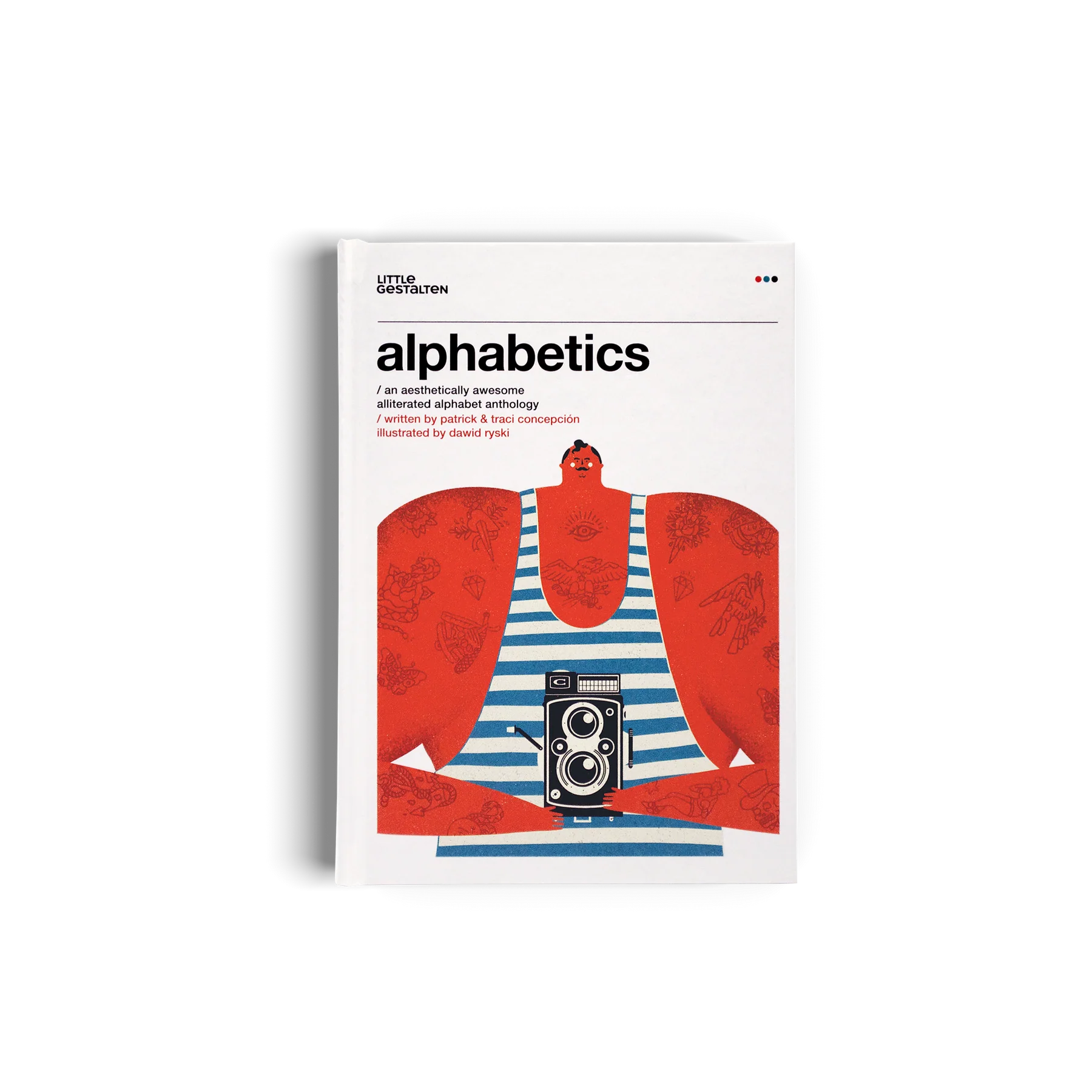
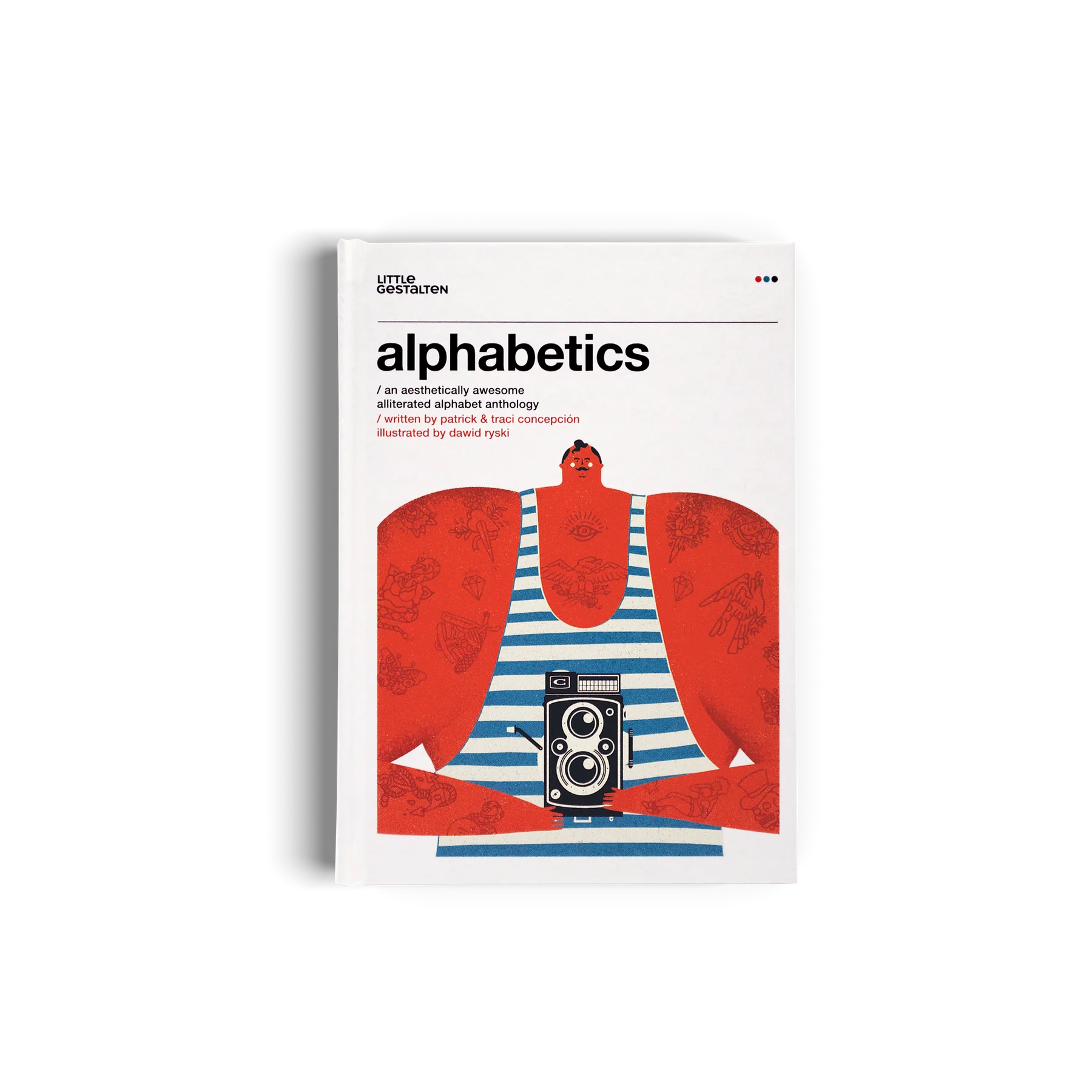
Alphabetics
Gestalten
Kids respond to Alphabetics because it’s immediately legible. Each page offers a clear visual entry point, making it easy to pick up, put down, and return to without instruction. Throughout the book, each letter is introduced through sentences composed entirely of words that begin with that letter.
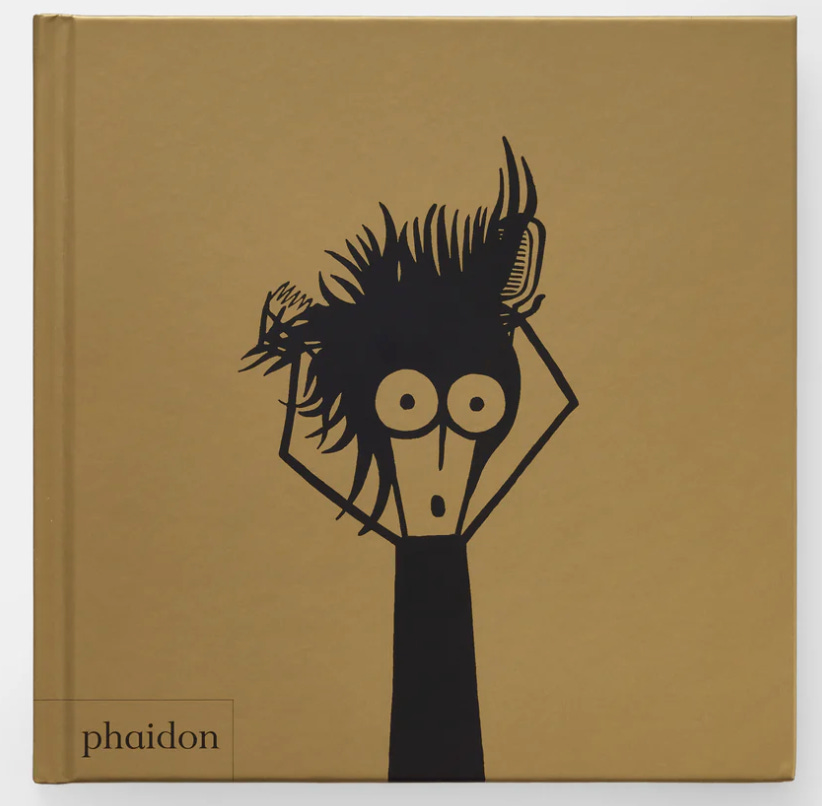
Marina Abramović Turned Herself Into Art and Wasn’t Sorry
Phaidon
This is the first picture-book biography of performance artist Marina Abramović created for young readers. Fausto Gilberti’s flat color, simplified forms, and graphic restraint read as visual iconography rather than narrative illustration, aligning closely with Abramović’s emphasis on presence, endurance, and reduction.

Piatti for Children
NorthSouth Books
A collected volume of picture books by Swiss graphic designer Celestino Piatti. Piatti’s illustrations borrow the visual economy of poster design — bold outlines, saturated color, pared-back form — translating graphic design logic directly into a children’s format.
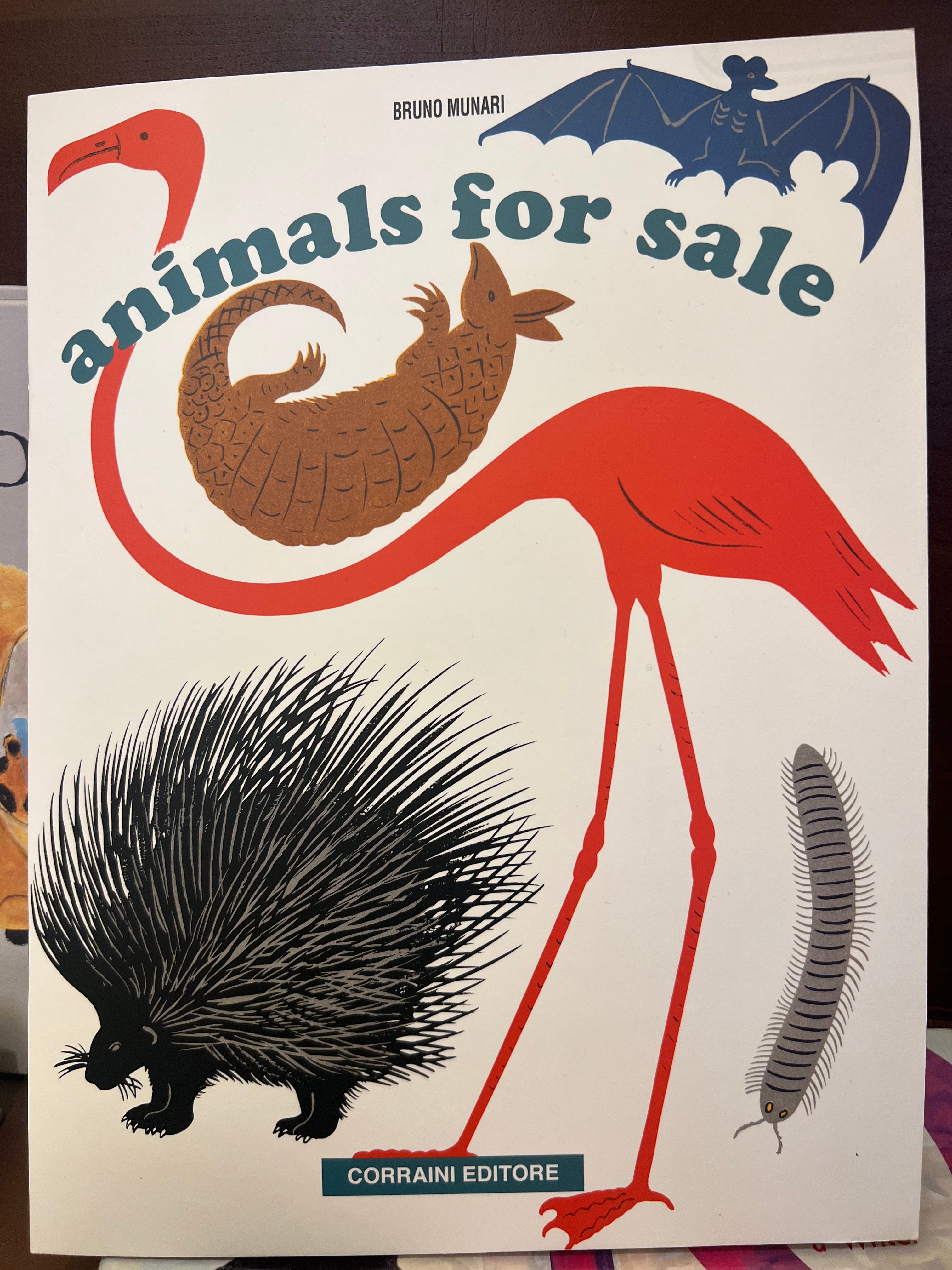
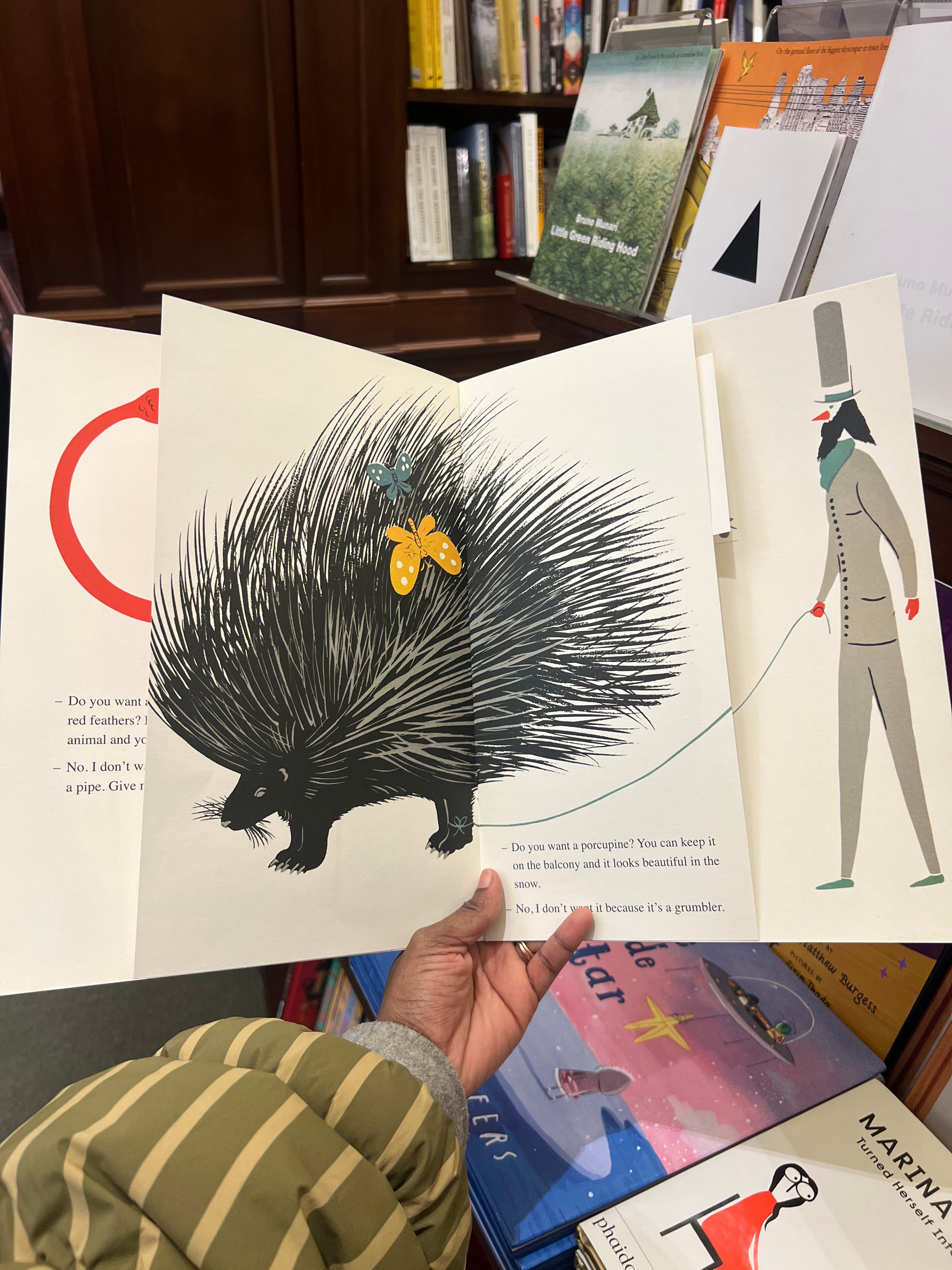
Animals for Sale — Bruno Munari
Corraini Edizioni
Bruno Munari was an Italian artist, designer, and educator whose work helped shape modern design education through an emphasis on play, systems, and visual thinking. In Animals for Sale, he treats animals as compositional problems, using flat color, bold silhouettes, and repetition to lead with visual play before meaning settles in.
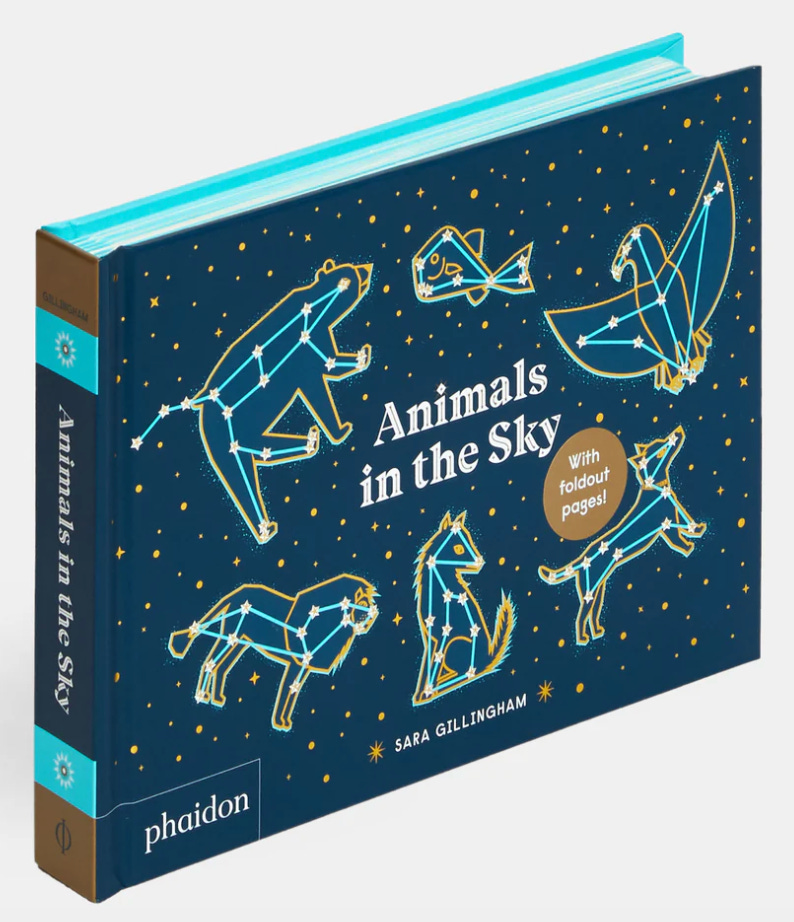
Animals in the Sky
Phaidon
An ambitious survey of creatures imagined and illustrated above us across cultures and centuries, presented as a dense visual archive for little ones.
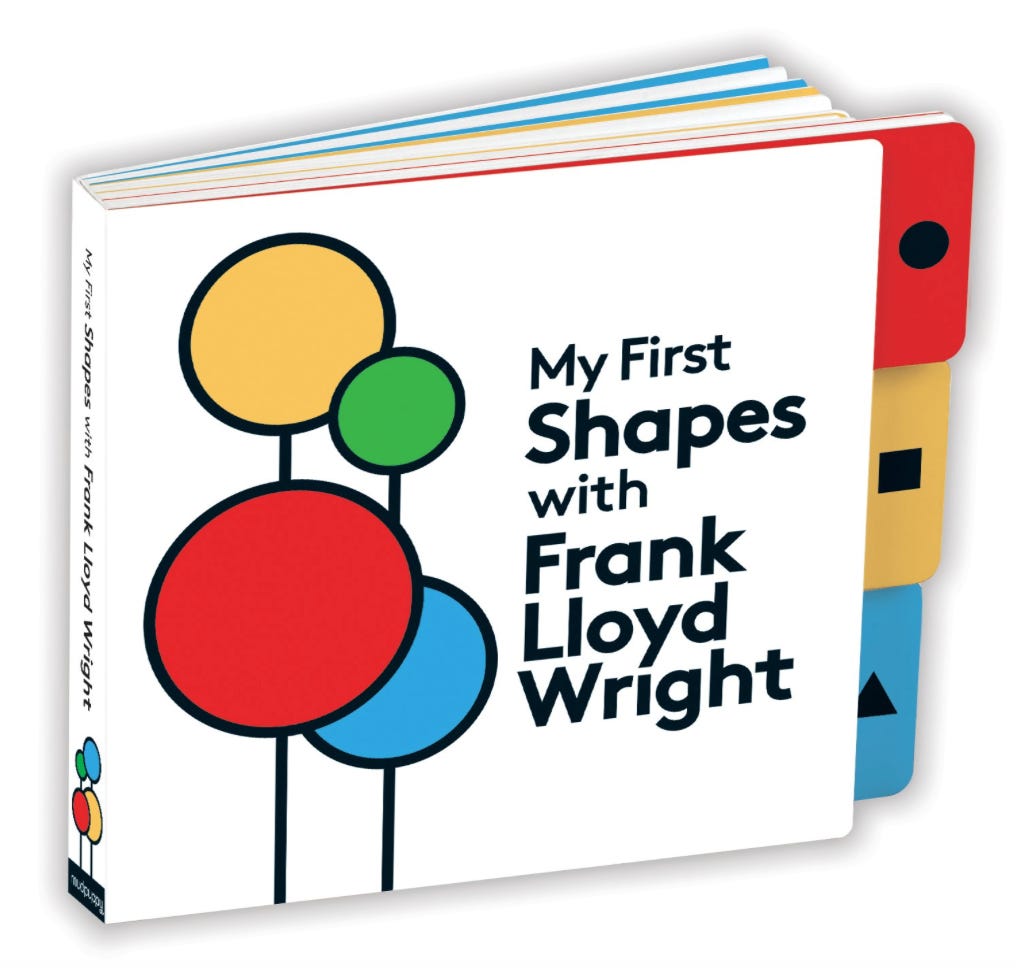
First Shapes: Frank Lloyd Wright
Abrams Books for Young Readers
A child-scaled introduction to Frank Lloyd Wright’s architectural language through basic forms — circles, squares, triangles.
A closing note on play
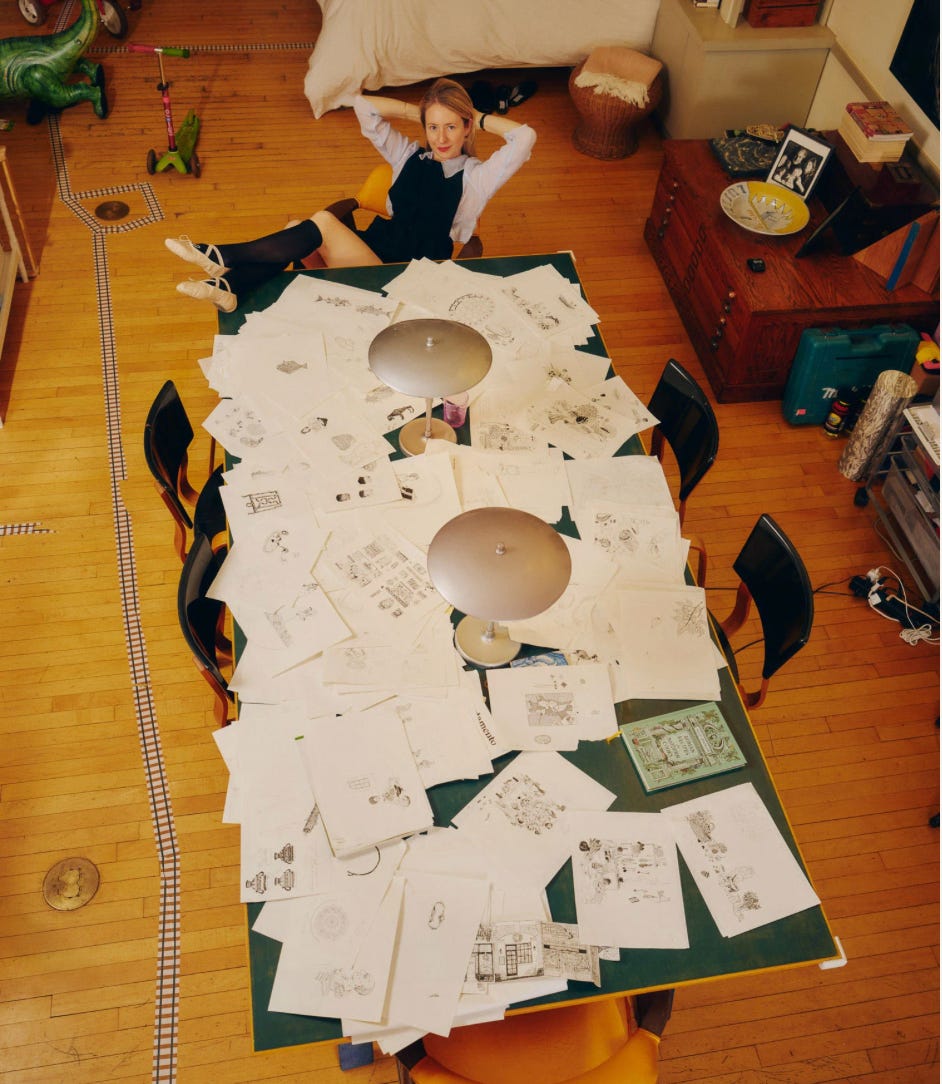
That impulse toward play isn’t just for kids. Joana Avillez, a New York–based illustrator and author whose work appears in The New Yorker, The New York Times, and Apartamento, and who created Roman Recipes for Modern Cooks, has noted that much of her creative work today feels like an extension of what she loved doing at nine — drawing without hesitation and trusting that instinct. It’s a reminder that adults, too, benefit from not losing that early curiosity and openness to visual exploration. Read the interview in Apartamento.
What children’s books have earned a permanent place in your home?I’d love to hear about it in the comments.
If anything here opened a small door for you, tell me! I love hearing what others are noticing. And if you know someone who would appreciate this kind of slow, design-forward attention, pass it along. These conversations travel best person to person.
Wishing you a good weekend!
xx
Merie
(Instagram: @merie_subryan)